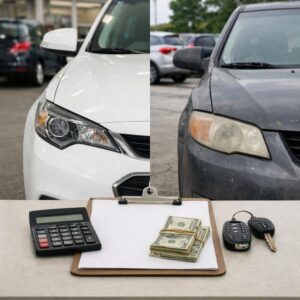
What if the “best price” on the windshield is the most expensive number in the deal?
Car pricing is designed to feel urgent, confusing, and non-negotiable-but it rarely is. The buyer who understands incentives, fees, timing, and dealer tactics can often save hundreds or even thousands.
Negotiating a car price isn’t about being aggressive; it’s about controlling the conversation with facts. When you know what the vehicle is worth before you sit down, you stop reacting to the salesperson’s script.
This guide shows you how to prepare, what to say, which fees to challenge, and when to walk away-so you can buy with confidence instead of overpaying.
Know the Real Car Price: MSRP, Invoice, Market Value, and Out-the-Door Cost
Before you negotiate a car price, separate the numbers dealers often blend together. MSRP is the sticker price, invoice price is roughly what the dealer was billed, market value reflects what similar vehicles are selling for locally, and out-the-door cost is the only number that shows what you will actually pay.
Use pricing tools like Kelley Blue Book, Edmunds, or TrueCar to compare local listings, trade-in value, dealer incentives, and current auto loan rates. In real negotiations, I have seen buyers focus only on a $1,500 discount from MSRP, then lose most of that savings through inflated documentation fees, add-ons, or a higher financing cost.
- MSRP: Useful as a starting point, but rarely the best measure of a fair deal.
- Market value: More important because it reflects real demand, inventory, and regional pricing.
- Out-the-door price: Includes taxes, title, registration, dealer fees, warranties, and accessories.
For example, a compact SUV listed at $32,000 may have a fair market value near $30,800, but the out-the-door price could jump to $34,000 after sales tax, registration, paint protection, and a dealer service fee. That is why you should ask every dealership for a written out-the-door quote before discussing monthly payments.
The smartest move is to negotiate from market value, not MSRP, and compare total purchase cost across multiple dealers. This gives you leverage and prevents a “good discount” from turning into an overpriced car loan.
How to Negotiate a Car Price Using Dealer Quotes, Trade-Ins, and Financing Separately
The smartest way to negotiate a car price is to keep the purchase price, trade-in value, and auto loan terms in separate conversations. Dealers often blend these numbers into one monthly payment, which makes it harder to see whether you are getting a fair vehicle price, a low trade-in offer, or expensive financing.
Start by collecting written out-the-door quotes from at least three dealerships for the same trim, options, and fees. Use tools like Edmunds, Kelley Blue Book, or TrueCar to compare market pricing, then ask each dealer to beat the lowest quote in writing before you discuss your trade-in or financing.
- Car price: Negotiate the total out-the-door cost, including destination fees, dealer fees, taxes, and registration.
- Trade-in: Get separate offers from CarMax or online car buying services before showing the dealer your vehicle.
- Financing: Secure a preapproved auto loan from a bank or credit union so the dealer has to compete on interest rate and loan terms.
For example, if a dealer offers $28,500 out the door but gives you $2,000 less than your trade-in is worth, the “deal” is not really better. I’ve seen buyers focus only on monthly payments and miss added costs like extended warranties, gap insurance, or marked-up interest rates.
Once each part is priced separately, compare the full cost of ownership, not just the payment. This gives you control and makes it much easier to spot where the dealership is trying to recover profit.
Car Negotiation Mistakes That Make Buyers Overpay-and How to Avoid Them
One of the biggest mistakes is negotiating from the monthly payment instead of the total out-the-door price. A dealer can make a $450 payment look affordable by stretching the auto loan term, adding fees, or increasing the finance cost. Always ask for the full breakdown: vehicle price, taxes, registration, dealer fees, add-ons, and the final amount financed.
Another common mistake is walking in without pricing data. Before visiting the dealership, check fair market value on Kelley Blue Book, Edmunds, or CarGurus, then compare similar local listings. If a used SUV is listed at $28,500 but comparable certified pre-owned models nearby are selling for $26,900, that gives you a real number to negotiate with-not just a guess.
- Skipping pre-approval: Get an auto loan quote from a bank or credit union first so the dealer’s financing offer has to compete.
- Focusing only on trade-in value: Negotiate the car price first, then discuss your trade-in separately to avoid confusing the numbers.
- Accepting add-ons too quickly: Paint protection, extended warranties, GAP insurance, and service contracts can be useful, but compare the cost before signing.
A real-world insight: the best deal is often won before you sit down with the finance manager. Email two or three dealerships for written out-the-door quotes, then use the lowest offer as leverage. If a salesperson refuses to provide clear pricing, that’s a warning sign-there are plenty of dealers who will.
Wrapping Up: How to Negotiate a Car Price Without Overpaying Insights
Negotiating a car price is less about winning a confrontation and more about controlling the decision. The strongest buyer is the one who knows the numbers, stays patient, and is willing to walk away. If the deal fits your researched target price, total budget, financing terms, and ownership costs, move forward with confidence. If the salesperson pressures you, hides fees, or shifts attention to monthly payments instead of the full price, pause and reassess.
A fair deal should feel clear, affordable, and documented. When it doesn’t, the best negotiation move is simple: leave and compare another offer.